
Socks for circulatory problems – through the day without pressure
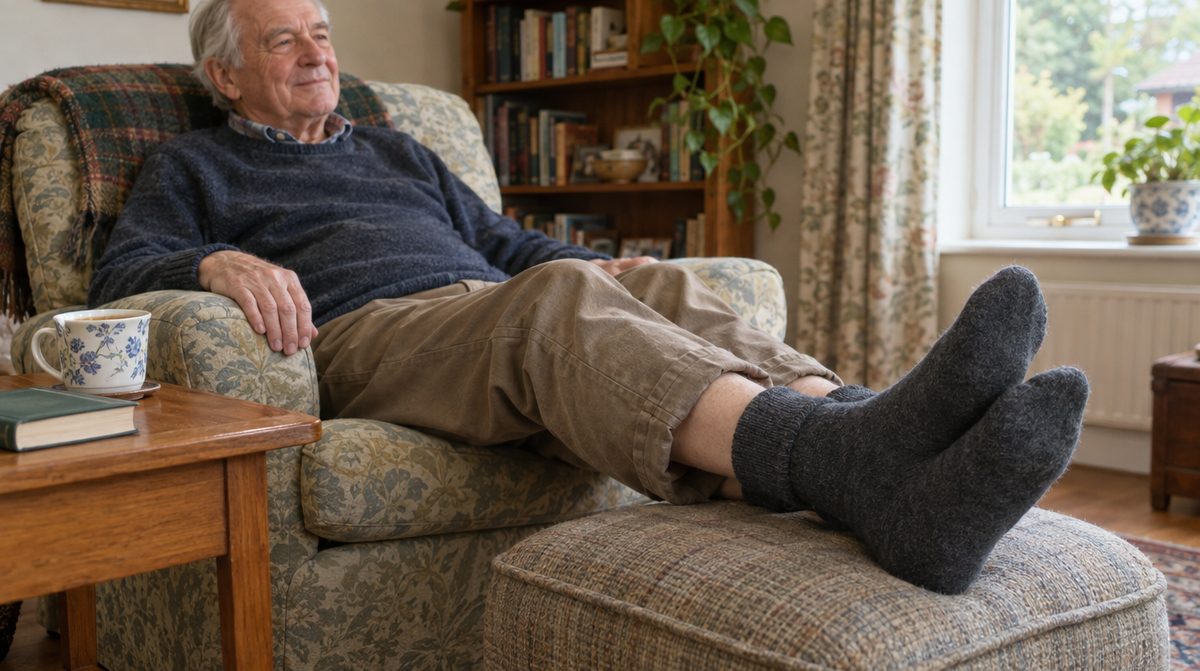
Anyone who sees marks from their sock cuffs on their legs in the evening knows the problem: a tight elastic presses all day long. With healthy legs, that is a nuisance. With circulatory problems, swollen legs or sensitive skin, it should not happen in the first place. Here you can read what matters in socks.
Important first: a sock without compression is not a compression stocking
These two products are often confused, but they have very different jobs:
- Medical compression stockings apply targeted pressure to the leg. They are prescribed by a doctor, for example for venous disorders or lymphoedema, and precisely measured at a medical supply store.
- Socks without compression aim for the opposite: as little pressure as possible. They are intended for people whose legs cannot tolerate additional pressure or for whom a normal sock cuff is already too much.
If your doctor has prescribed compression stockings, please keep wearing them. A sock without compression does not replace them. For some arterial circulatory disorders, on the other hand, compression is not suitable – this is always clarified by a medical examination.
How to recognise a good sock without compression
- A cuff that stays up without constricting. Look for wide, soft cuffs. A good test: after taking the socks off, there should be no deep grooves on your skin.
- Elastic fabric throughout the sock. A small proportion of elastane ensures that the sock adapts to the leg, even if it swells a little during the day.
- No thick seam over the toes. A flat or seamless toe area does not rub.
- Breathable material. Cotton, bamboo viscose or merino wool wick away moisture. Skin that does not stay damp is less prone to irritation.
- The right length. With swollen lower legs, a knee-high sock without compression can be more comfortable because its cuff sits higher up.
Small habits that do your legs good
- Keep moving: walks and foot circles while sitting get your calf muscles going.
- Put your legs up: if your doctor's advice allows it, raising your legs in the evening relieves many legs.
- Avoid standing or sitting for too long: get up now and then and take a few steps.
- Watch your skin: redness, swelling that does not go down or changes in your skin should be seen by a doctor.
How DEOMED® puts this into practice
DEOMED® medical socks and knee-high socks are made without compression and are registered as medical devices. The cuff stays up without constricting, and the toe area is seamless. Depending on the model, cotton, bamboo viscose or merino wool is used, in most models complemented by silver ions in the yarn and a Sanitized® finish. According to the manufacturer, the socks are suitable for leg oedema and for arterial or venous circulatory disorders of the legs, among other things.
For particularly swollen legs, the DEOMED® Medic Deo MaxFlex is an extra-stretchy terry sock; as a knee-high sock, there is for example the DEOMED® Bamboo Long Silver. View all DEOMED® products →
This guide does not replace medical advice. If you have questions about your legs and the right care, please contact your doctor or your medical supply store.